Denver Tech Center (DTC)
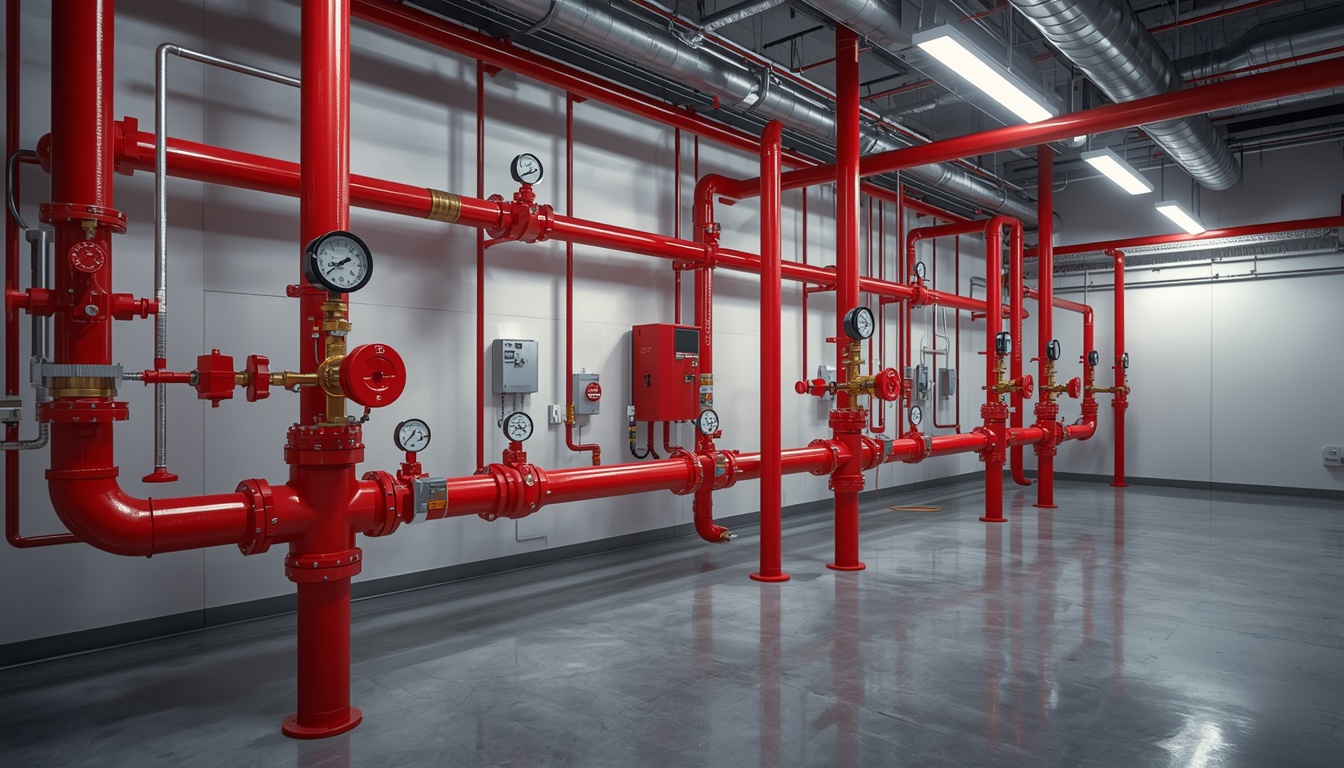
Class-A high-rise office at I-25 and Belleview; standpipe risers, fire pumps, and full life-safety stacks with emergency voice on every floor.

Colorado Front Range • Arapahoe County
Greenwood Village runs on two very different building types: the Class-A high-rise towers of the Denver Tech Center along I-25 at Belleview and Orchard, and the large-lot estates east of University toward the Highline Canal. Both fall under the South Metro Fire Rescue Authority, and both need inspection reports written the way South Metro wants to read them. From standpipe risers and fire pumps in a 12-story DTC office to a monitored NFPA 13D system on an acreage home, Red Rocks Fire Protection works out of Centennial a few minutes down the interstate and clears the deficiency list on the first pass.
South Metro Fire Rescue is the Authority Having Jurisdiction for Greenwood Village and conducts the fire inspections for commercial, multi-family, and institutional properties in the city. Its non-emergency line is (720) 989-2000, and permitting and code information is at https://www.southmetro.org/. We schedule inspection and testing work with your on-site team and format every deficiency list to match what South Metro Fire Rescue’s prevention staff expect, so corrections get signed off without rework.
Greenwood Village splits cleanly into two service profiles: the vertical Class-A office and mixed-use of the Denver Tech Center along I-25, and the low-density estate residential east of University. Below are the districts and corridors our technicians cover most often.
Class-A high-rise office at I-25 and Belleview; standpipe risers, fire pumps, and full life-safety stacks with emergency voice on every floor.
Amphitheatre district with adjacent office and hotel; large-assembly egress, alarm, and outdoor-venue coordination during concert season.
Twin residential towers over retail and restaurants at Belleview and I-25; high-rise sprinkler, standpipe, and kitchen-hood suppression stacked in one address.
Transit-oriented mid- and high-rise near the RTD light-rail station; residential-above-retail with combined life-safety and BDA radio-coverage scopes.
Mid-rise office and flex space off the Orchard interchange; wet and dry sprinkler systems plus clean-agent for server rooms.
Established office-park core of the DTC; older wet systems with faded hydraulic nameplates and aging fire alarm panels.
Gated large-lot custom homes with an HOA; residential 13D sprinkler and monitored alarm retrofits at remodel.
Established east-side single-family off Belleview and Quebec; backflow and monitored smoke-detection work on mature homes.
Large-lot residential toward University and the Highline Canal; irrigation and fire-line backflow testing on acreage properties.
Low-density estate lots east of Holly; long private drives that factor into fire-access and hydrant-flow considerations.
Homes bordering open space along the Highline Canal; wildland-interface clearance and exterior detection considerations.
Southern office and flex cluster near Arapahoe Road; ESFR and clean-agent scopes for tech and back-office tenants.
Every service below is run by NICET- or CSA-certified technicians who work high-rise standpipes and fire pumps as routinely as residential 13D systems, with reports formatted to South Metro Fire Rescue Authority’s preferred layout so corrections clear without rework.
Sprinklers, standpipes, alarms, extinguishers, backflow, and clean-agent suppression — each system on its own code cadence, delivered as a single South Metro–formatted report for the whole DTC tower or estate property.
Wet, dry, and preaction sprinkler plus NFPA 14 standpipe risers exercised per NFPA 25 — riser flow tests, main-drain tests, and hose-valve checks on every floor of the DTC high-rises.
Annual and weekly-churn fire-pump testing to NFPA 25 and NFPA 20 for the DTC and Landmark towers — flow tests at 100 and 150 percent of rated capacity, with a documented pump curve South Metro will accept.
Initiating devices, notification appliances, control panels, and floor-by-floor emergency voice / mass-notification tested to NFPA 72 by NICET-certified technicians on occupied high-rise floors.
UL-listed central station monitoring with signal verification and direct dispatch into South Metro’s CAD when an alarm confirms — from a single DTC tower to a monitored estate home east of University.
Annual cross-connection testing for fire-line, irrigation, and domestic backflow preventers on DTC office campuses and large-lot residential; certification filed with the water utility.
NFPA 10 extinguisher service and UL-300 / Ansul R-102 kitchen-hood suppression tested and tagged per NFPA 96 — common at Landmark and Fiddler’s Green restaurant tenants.
FM-200, Novec 1230, and CO₂ systems tested to NFPA 2001 for the data floors, server rooms, and network closets that fill DTC Class-A office and the Orchard-corridor tech tenants.
Pre-plan review with South Metro’s Community Risk Reduction team, tenant build-out coordination in occupied towers, and deficiency-correction project management for DTC property-management portfolios.
These are the recurring deficiency categories we document across Greenwood Village properties, weighted toward the high-rise DTC office stock. None of this is a citation from a specific building — it’s the pattern of findings our technicians correct most in this jurisdiction.
DTC and Landmark towers run stationary fire pumps that need annual NFPA 20 flow testing at 100 and 150 percent of rated capacity. We see pumps that have drifted below their curve or missed a year entirely — we flow-test against the manufacturer curve and document churn pressure so South Metro signs off.
High-rise NFPA 14 standpipes require periodic flow and pressure-reducing-valve testing that building crews often skip on upper floors. We test every riser and PRV floor by floor and log the readings South Metro expects on a high-rise report.
DTC data floors and server closets protected by FM-200 or Novec 1230 fail inspection when cylinders miss their weight check or a rack rebuild blocks a discharge nozzle. We weigh cylinders, verify agent concentration, and confirm nozzle coverage against the room build-out.
Class-A floors turn over constantly in the DTC, and demolition frequently disables speakers or leaves the voice-evac system out of sequence. We re-commission the emergency voice / mass-notification system and document the sign-off with South Metro.
Sealed lead-acid backup batteries carry a 4–5 year service life. Failed load tests are a top finding across the older Greenwood Plaza office panels — we track every panel’s battery age and replace before the annual test.
Fire-line and irrigation backflow assemblies on both DTC campuses and large-lot estate lots east of University require annual testing by a certified cross-connection tester. We test and file the certification directly with the water utility and the South Metro AHJ.
A common high-rise finding — missing or broken FDC caps at the base of a DTC tower let debris into the check valve and can fail an inspection outright. We carry replacements on the truck and install them on the spot.
Greenwood Village holds one of the densest concentrations of high-rise Class-A office in metro Denver inside the Denver Tech Center, clustered around the I-25 interchanges at Belleview, Orchard, and Arapahoe Road. Those towers carry the most demanding life-safety stacks we service anywhere: NFPA 14 standpipe risers, NFPA 20 fire pumps, floor-by-floor emergency voice, and clean-agent suppression protecting data floors and network closets. The mixed-use core at Landmark and near Belleview Station adds high-rise residential stacked over ground-floor retail and restaurants, combining sprinkler, standpipe, and kitchen-hood suppression in single addresses. Fiddler’s Green Amphitheatre brings large-assembly egress and event-season coordination. East of University the city shifts to large-lot luxury residential — estate homes on acreage lots, many with monitored NFPA 13D residential sprinkler systems, irrigation and fire-line backflow assemblies, and long private drives that shape fire-access planning.
South Metro Fire Rescue Authority is the AHJ for Greenwood Village. South Metro’s Community Risk Reduction division issues permits, conducts on-site inspections, and reviews sprinkler, standpipe, fire-pump, alarm, and clean-agent submittals for the DTC high-rises, the Landmark and Fiddler’s Green mixed-use, and the east-side residential inside the city.
Yes. High-rise life-safety is our core work in Greenwood Village. We test NFPA 14 standpipe risers and hose valves floor by floor, run annual NFPA 20 fire-pump flow tests at 100 and 150 percent of rated capacity, and document the pump curve and PRV readings in the format South Metro expects on a high-rise report.
Yes. We inspect, test, and maintain FM-200, Novec 1230, and CO₂ clean-agent systems to NFPA 2001 — weighing cylinders, verifying agent concentration, and confirming nozzle coverage against the current room build-out. That work is routine across the Orchard-corridor tech tenants and DTC Class-A office where server rooms and network closets are the norm.
Our office is a few minutes south in Centennial, so our emergency response window for fire-protection emergencies in Greenwood Village is typically under 90 minutes — usually faster along the I-25 corridor. We staff a 24/7 line and dispatch the same technicians who know your building, not a call center.
Per NFPA 25 and the IFC as adopted by South Metro, wet-pipe sprinkler systems require quarterly and annual inspections with a 5-year internal inspection, and standpipes add flow and pressure-reducing-valve testing on a defined cycle. Fire pumps get weekly or monthly churn checks plus an annual flow test. We track every cadence for every riser and pump we service and email you 30 days before a test is due.
Yes. Class-A floors in the DTC turn over often, and demolition regularly disables sprinkler zones, alarm devices, or the emergency voice system. We coordinate with the property manager, provide fire watch when a system is offline, and re-commission the affected sprinkler, alarm, and voice-evac systems with South Metro sign-off before the floor is reoccupied.
Yes. The large-lot estates east of University toward the Highline Canal frequently carry monitored NFPA 13D residential sprinkler systems, along with irrigation and fire-line backflow assemblies. We inspect and test those systems, handle the annual backflow certification, and monitor residential alarm and smoke-detection systems on acreage properties.
We service the alarm, suppression, and extinguisher systems for the office, hotel, and restaurant properties around the Fiddler’s Green and Landmark district, and we work around large-assembly and event-season schedules so testing doesn’t collide with concert dates. Assembly-occupancy egress and notification are always part of the inspection scope in that district.
Choosing the right life safety partner for your properties is about more than maintaining systems and meeting requirements. It's about having a local team you can trust to communicate clearly, advocate for you, stay ahead of compliance, and take responsibility for protecting your people and property across the Front Range.
At Red Rocks Fire Protection Services, we want to be more than another vendor. We want to be your trusted life safety partner for years to come.
Ready to start the conversation? Call us at (720) 733-8050 or Contact Us to connect with our team.
Want to learn more about what makes Red Rocks Fire Protection Services different?
Explore the pages below to discover our commitment to safety, our purpose, and the promises that guide every relationship we build.